Education is a lifelong process of becoming more capable, ethical, and creative in how we relate to ourselves, others, and the planet. It is not only about test scores but about preparing people to navigate uncertainty, solve real problems, and find meaningful work and contribution in changing societies.
Learning for Life
round the world, education systems still focus heavily on memorization and high stakes exams, yet global assessments show declining basic skills and growing gaps in wellbeing and equality. PISA 2022 found an unprecedented drop in math and reading across OECD countries since 2018, roughly three quarters of a school year in mathematics, while systems like Singapore, Japan, Korea and Switzerland maintained high performance with strong support for teachers, families, and digital access.
At the same time, the world is changing rapidly: climate risks, digitalization, AI, and shifting labour markets demand new combinations of knowledge, skills, attitudes and values—sometimes called “transformative competencies”. Future relevant education must therefore help each learner:
- Understand core disciplines deeply enough to use them in real life.
- Develop social, emotional, ethical and practical skills.
- Discover and cultivate their unique talents—whether in arts, crafts, care work, engineering, or science.
A gifted musician, farmer, caregiver or craftsperson is as essential to a healthy society as a coder, doctor or policymaker. Education should create many pathways, not one narrow ladder.
What current systems teach us (key differences and outcomes)
Comparative research highlights some recurring patterns:
- High-performing, more equitable systems (e.g. Singapore, Japan, Korea, some Nordic countries):
- Strong basics in literacy, numeracy, and science.
- High expectations for all students, not just elites.
- Well-trained, respected teachers; continuous professional development.
- Coherent curricula that balance knowledge with skills and student wellbeing.
- Systems with persistent challenges (many low- and middle-income countries, and disadvantaged groups within richer countries):
- Large class sizes, resource gaps, and digital divides.
- Overloaded, exam-driven curricula that leave little time for creativity, critical thinking, or practical skills.
- Greater learning losses from COVID 19, with long-term impacts on earnings and health.
Outcomes follow these structures: systems that prioritize test prep alone may achieve short term scores but often struggle with student wellbeing, motivation, and creativity; systems that integrate broader competencies tend to produce more adaptable, civically engaged graduates, even if they also face pressure around exams.
Core elements of a future relevant education
International frameworks like the OECD Learning Compass 2030 ,UNESCO’s green–digital transition agenda and many other educational organizations point towards a shared vision. We can start with these six pillars:
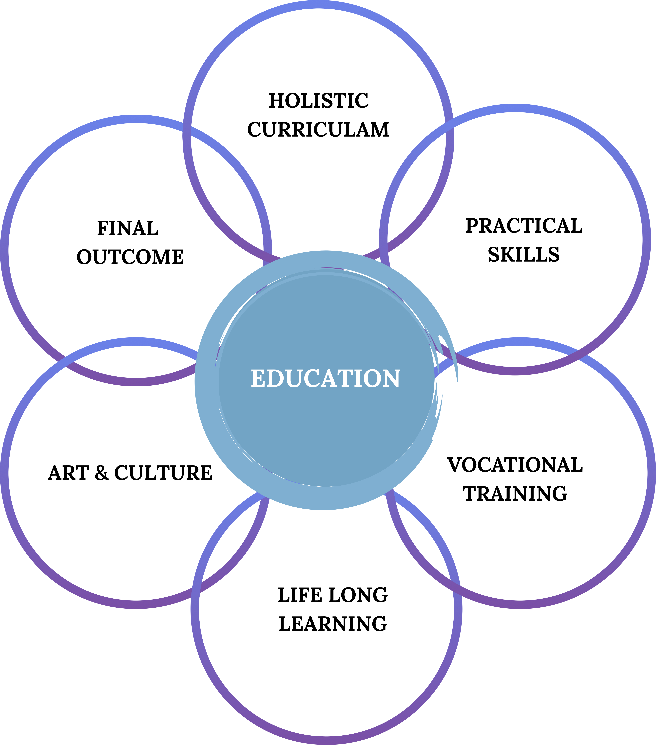
- Holistic curriculum
Education should combine:- Core academic foundations (literacy, numeracy, science, history).
- Life skills (communication, conflict resolution, financial literacy, health and mental wellbeing).
- Nature and systems thinking (how ecosystems, economies, and societies interact).
- Ethics, civics, and global citizenship (rights, responsibilities, empathy, diversity).
Holistic curricula align with evidence that social emotional and ethical skills support better academic results, mental health, and civic participation.
- Practical and local skills
Learners need hands on experience with:- Food and land: gardening, composting, basic agroecology.
- Making and repair: carpentry, textiles, basic mechanics, repair culture.
- Digital and media literacy: coding basics, critical evaluation of information, safe and ethical technology use.
- Sustainable living: energy, water, waste, and circular practices at household and community level.
Such skills strengthen resilience, support green and digital job markets, and connect learning to everyday life.
- Vocational and green–digital pathways
Future labour markets will need skills in renewable energy, organic/regenerative farming, healthcare, care work, local crafts, data and AI, and digital repair/maintenance. Good systems:- Offer respected vocational and technical tracks linked to real local opportunities.
- Integrate “green skills” (sustainability, resource management) and “digital skills” (data, coding, tool use) into both general and vocational education.
- Lifelong and community learning
Learning does not end with school. Societies thrive when adults can reskill and upskill throughout life. This includes:- Community libraries and learning hubs.
- Reading circles, maker spaces, and citizen science projects.
- Flexible micro credentials and short courses accessible to youth and adults, both online and offline.
- Arts, culture, and identity
Arts, sports, and culture nurture imagination, resilience, and a sense of belonging. Systems that protect time and resources for music, drawing, theatre, storytelling, local languages and heritage:- Support mental health and creativity.
- Preserve cultural diversity and intergenerational knowledge.
A child strongly drawn to music should have the opportunity to pursue mastery in that field while still learning essential skills; education can be personalized without sacrificing shared foundations.
- Human outcomes: who are we nurturing?
The essential question is: What kind of human beings do we want education to help cultivate? Many global frameworks converge on profiles such as:- Knowledgeable and curious: able to keep learning independently.
- Ethical and responsible: aware of impacts on others and the planet.
- Collaborative and empathetic: able to work with diverse people.
- Creative and resilient: able to face uncertainty and shape change.
These outcomes require aligning curriculum, assessment, teacher development, and school culture—not just adding more content.
How governments can evolve education systems
Drawing from OECD, UNESCO, and national reform experiences, governments can take several concrete steps:
- Redesign curricula around competencies, not just content
- Reduce overload and repetition; focus on depth of understanding, critical thinking, and application.
- Integrate sustainability, digital literacy, and socio emotional learning across subjects, not as add ons.
- Reform assessment
- Balance standardized tests with project work, portfolios, and real world tasks.
- Use assessment to support learning and feedback, not only to rank students and schools.
- Invest in teachers
- High-quality initial teacher education with strong practicum.
- Continuous professional development in new pedagogies, digital tools, inclusive and trauma sensitive practices.
- Give teachers time and autonomy to collaborate, design, and reflect.
- Bridge digital and green transitions
- Ensure all schools have safe, reliable connectivity and devices, while teaching students to use technology for solving environmental and social challenges, not only for consumption.
- Promote “green campuses” where buildings, energy, water, and food systems become learning laboratories.
- Strengthen equity
- Target resources to disadvantaged schools and communities.
- Provide early childhood education, school meals, and support services that mitigate poverty related learning barriers.
- Open schools to communities
- Treat schools as community hubs for health, culture, environment, and civic participation.
- Involve parents, elders, local practitioners, and youth in co designing local curricula and projects.
How to contribute to this component
You and your community can help make this Education component a living, practical base by:
- Describing the current education system where you live: strengths, gaps, and pressures on students and teachers.
- Sharing examples of alternative or complementary models (community schools, apprenticeships, youth climate clubs, maker spaces, arts programs) and what outcomes you have seen.
- Offering mentorship or teaching a practical or creative skill—online or in person.
- Helping design localized materials that connect global competencies (green, digital, civic) with local culture, language, and livelihoods.
Taken together, these contributions can support a shift from education as exam preparation to education as preparation for life—with room for every learner’s unique gifts.


