Culture & social cohesion form the heart of a community: they provide identity, belonging, and resilience through shared rituals, stories, languages, and values. Research shows that strong cultural ties and diverse social networks improve mental wellbeing, reduce loneliness, and enhance social trust—especially when diversity is embraced through inclusive practices.
Culture & social cohesion – the heart of community
Culture is the living memory of a people: expressed through language, stories, arts, food, festivals, crafts, and ways of relating to each other and the land. It is not static; it evolves while carrying forward wisdom that often holds solutions to modern challenges—from sustainable living to emotional wellbeing.
UNESCO estimates that at least 40% of the world’s 7,000+ languages are endangered, with up to 90% potentially lost by 2100—each carrying unique knowledge of ecology, medicine, and social systems. Cultural diversity, like biodiversity, strengthens societies: diverse friend groups and cultural practices boost innovation, adaptability, and cohesion when supported by mutual respect and shared spaces.
Social cohesion—the sense of trust and belonging across differences—flourishes when cultures are nurtured inclusively, bridging generations and fostering resilience.
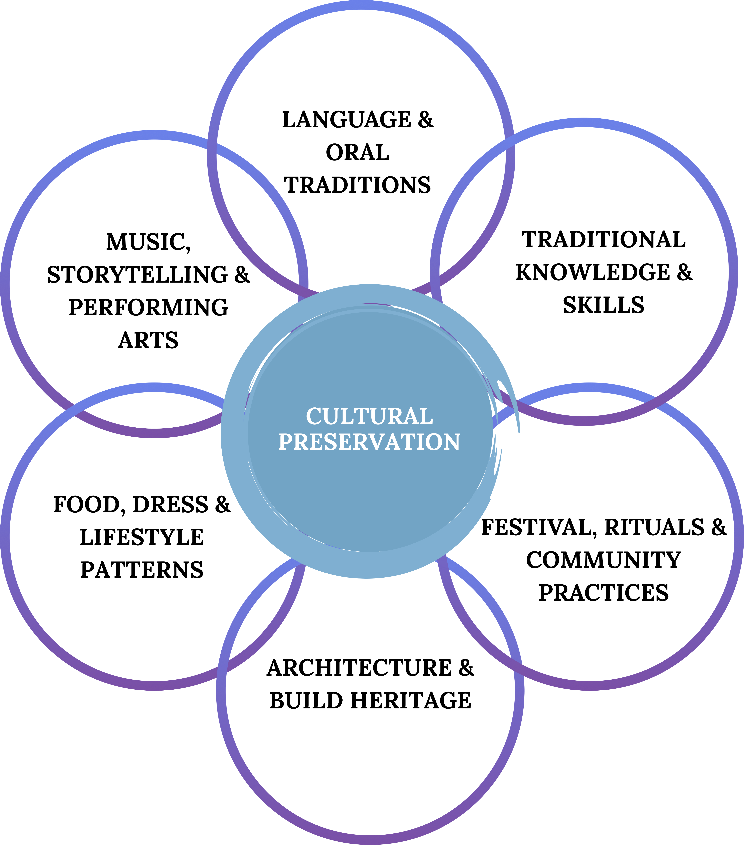
Six core factors of culture & cohesion
- Language & oral traditions
Languages encode worldviews, emotions, and ecological knowledge; losing one erases a universe of insights.- Practical preservation: record elders, teach in schools, create media (podcasts, apps, books) in local tongues, and celebrate multilingualism.
- Traditional knowledge & skills
Indigenous and local wisdom in medicine, farming, crafts, and weather lore often proves sustainable and adaptive.- Practical preservation: apprenticeships with elders, community workshops, documentation of recipes and techniques, and blending with modern science where beneficial.
- Festivals, rituals & community practices
Ceremonies reinforce bonds, transmit values, and create joy across generations.- Practical preservation: inclusive events open to all, youth involvement, digital sharing of rituals to reach diaspora.
- Architecture & built heritage
Places like temples, villages, and markets reflect harmony with nature and culture.- Practical preservation: sensitive renovations, adaptive reuse, teaching traditional building skills alongside modern codes.
- Food, dress & lifestyle patterns
Local foods and attire embody ecological adaptation and creativity.- Practical preservation: farm-to-table initiatives, artisan markets for textiles, seasonal cooking classes, celebrating dress during festivals.
- Storytelling, music & performing arts
These preserve history, express emotions, and build empathy.- Practical preservation: local festivals, school programs, recording sessions, community theatres and music circles.
Why culture and cohesion matter
Preserving and evolving local culture delivers measurable benefits:
- Identity and wellbeing: Cultural participation reduces stress, loneliness, and depression; heritage sites boost mental health more than some medical interventions.
- Practical wisdom: Traditional knowledge offers solutions to climate challenges, health, and sustainability that modern systems often overlook.
- Economic value: Cultural tourism and crafts sustain livelihoods; UNESCO Intangible Heritage practices support SDG health and education goals.
- Resilience: Diverse cultures foster tolerance and innovation, making societies more adaptable.
Cultural monocultures risk stagnation and loss; vibrant diversity, when cohesive, builds strength.
Lessons from history
Ancient cultures teach enduring principles:
- Advantages: Nature aligned societies (e.g., Indigenous longhouses, Mediterranean courtyards) thrived sustainably for millennia; arts and philosophy supported emotional health; community rituals provided security nets.
- Disadvantages: Rigid exclusion or failure to adapt led to conflict and decline.
Key insight: Cultures endure when they preserve core wisdom while evolving to meet new realities.
Practical ways to preserve and strengthen
| Cultural Area | Methods of Preservation |
| Language | Mother-tongue education, elder recordings, bilingual media/apps |
| Food | Local farm-to-table, recipe archives, seasonal festivals |
| Dress | Artisan cooperatives, fashion shows, everyday wear encouragement |
| Music & Dance | Community bands/schools, digital platforms, intergenerational classes |
| Architecture | Heritage restoration, eco-traditional builds, site museums |
| Festivals & Rituals | Inclusive celebrations, youth leadership roles, global sharing |
| Arts & Crafts | Workshops, e-commerce for artisans, public art spaces |
Preservation evolves traditions into living bridges to the future.
How to contribute to this component
You can help build this Culture & Social Cohesion resource by:
- Sharing local art, stories, rituals, or skills—photos, videos, recipes, or oral histories.
- Documenting traditions at risk and how they solve modern problems (e.g., sustainable practices).
- Organizing or reporting on cultural events that foster cohesion across differences.
- Discussing strengths/challenges of your culture and ways to adapt it resiliently.
Contributions preserve heritage while weaving it into the blueprint for thriving communities.


