Media and communication form the nervous system of a society: they carry information, shape understanding, and coordinate collective action—or they can spread confusion, fear, and division when misused. Studies show misinformation spreads up to 6–10 times faster than facts on social media due to novelty bias and algorithmic amplification, eroding trust and amplifying polarization.
Media & communication – building trust and understanding
A healthy media ecosystem informs, educates, connects, and holds power accountable—without sensationalism, manipulation, or exclusion. In self-sufficient communities, communication fosters resilience, shared values, and informed decisions.
Challenges include deepfakes (8 million files projected for 2025, up from 500K in 2023), AI-generated content, and platforms prioritizing engagement over truth, which undermine reality and mental health. Solutions lie in ethical standards, diverse voices, and community-led verification.
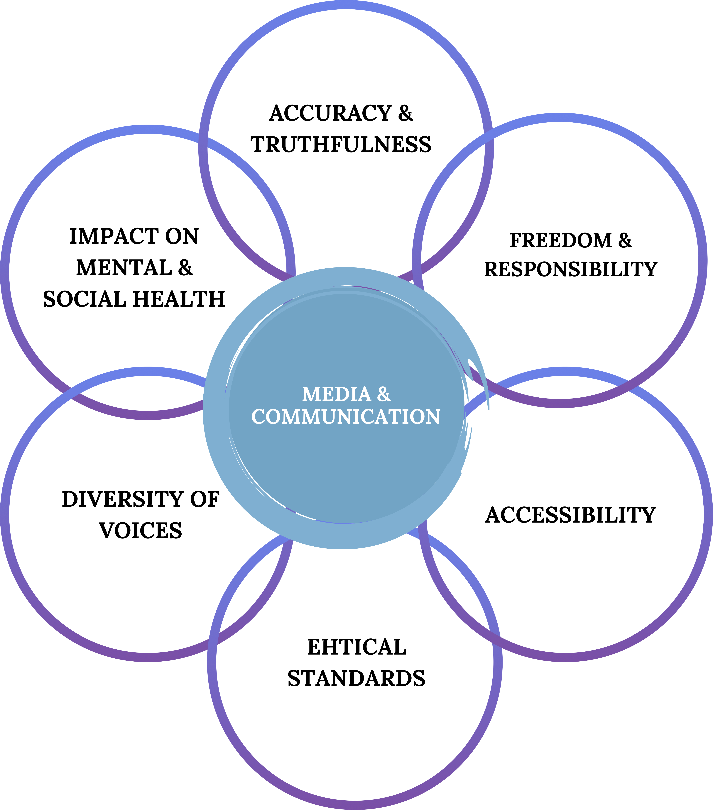
Six core factors for trusted media
- Accuracy and truthfulness
- Verified facts over speculation; transparent sourcing and corrections.
- Practical: fact-checking networks, source citations, plain language for complex issues.
- Freedom with responsibility
- Free expression balanced by accountability for harm (e.g., incitement, falsehoods).
- Practical: self-regulation codes, community ombudsmen, rapid response to corrections.
- Accessibility
- Information in local languages, offline formats, for all ages/abilities.
- Practical: community radio, low-data apps, audio news, braille/large-print materials.
- Ethical standards
- Privacy, dignity, sensitivity in crises; avoid exploitation.
- Practical: ethical guidelines co-created with communities, trauma-informed reporting.
- Diversity of voices
- Perspectives from women, youth, elders, minorities, rural voices.
- Practical: inclusive newsrooms, citizen journalism training, multilingual platforms.
- Impact on health and cohesion
- Content that informs without addicting or dividing; WHO urges regulation of harmful algorithms.
- Practical: wellbeing labels, time limits, positivity nudges.
Role of media in society
Media:
- Informs: Local/global events, risks, opportunities.
- Educates: Health, science, skills; counters myths.
- Connects: Builds bridges across divides.
- Empowers: Amplifies marginalized voices.
- Shapes culture: Influences values thoughtfully.
- Strengthens accountability: Exposes corruption, celebrates good governance.
When ethical, media builds resilience; when not, it fractures trust.
Historical lessons
- Propaganda destroys: WWII, authoritarian regimes used media to control and divide.
- Free press builds: Independent journalism fueled democracy, reform.
- Suppression stalls: Censored societies lag in trust, innovation.
- Tech revolutions reshape: Printing press spread literacy; internet globalized knowledge—but also misinformation.
Communication quality determines societal evolution.
Communication methods – pros and cons
Traditional media (print, radio, TV)
- Pros: verified, broad reach, less addictive.
- Cons: slow, elite-controlled.
Digital media (websites, blogs)
- Pros: instant, diverse voices.
- Cons: misinformation risk, echo chambers.
Social media
- Pros: real-time citizen journalism, global connection.
- Cons: falsehoods spread 6x faster; algorithms favor outrage.
Interpersonal (face-to-face, calls)
- Pros: trust-building, nuanced.
- Cons: limited scale.
Balanced ecosystems use all wisely.
Future of media & communication
- AI-driven: personalized news, moderation—but risks deepfakes (fraud up 1740% in North America 2022–2023).
- Immersive (AR/VR): educational worlds, but blurring reality.
Decentralized networks: blockchain platforms like Mastodon, DeSo, Lens Protocol for user-owned data/content. - Human-centric: digital minimalism, WHO wellbeing guidelines.
- Regenerative: low-energy servers, biodegradable devices.
- Future: faster, smarter, but ethically complex—needing transparency and human oversight.
How to contribute to Media & Communication
You can strengthen this Media & Communication component by creating trusted, community-centered information ecosystems at any scale:
- Create/share local ethical media: Launch neighborhood newsletters, podcasts, community radio, or video series covering local news, culture, and solutions in plain language.
- Build fact-checking tools/resources: Develop simple verification guides (source checklists, reverse image search tutorials) or community WhatsApp groups dedicated to debunking rumors before they spread.
- Offer digital literacy training: Teach elders, rural users, youth, and small businesses how to spot deepfakes, verify sources, use privacy settings, and avoid phishing/scams.
- Develop open-source platforms: Create low-data news apps, multilingual audio news, or decentralized social networks prioritizing truth over clicks (e.g., Mastodon-style community servers).
- Train citizen journalists: Equip volunteers with smartphone skills for ethical reporting—interviewing, basic editing, trauma-sensitive storytelling, and fact-checking workflows.
- Establish community media councils: Form local ombudsmen or ethics boards that review coverage, handle complaints, and set standards for fairness and accuracy.
- Promote wellbeing media: Design content nudges (time limits, positivity filters) or campaigns encouraging balanced consumption (“news diets,” digital sabbaths).
- Bridge digital divides: Set up community Wi-Fi hotspots, solar-powered charging stations, or offline content libraries reaching remote/unconnected areas.
- Counter polarization: Create cross-community dialogue platforms (podcasts featuring “opposing” voices finding common ground) or depolarization workshops.
- Document media successes/failures: Share case studies of local outlets that built trust (or lost it) through transparent practices, so others can learn.
Every clear voice multiplies: from neighborhood WhatsApp admins flagging fakes to global platforms prioritizing understanding over outrage, contributions rebuild media as society’s connective tissue.


